












 RCB E2 SERIES BRAKING SYSTEM
 RCB S1 SERIES BRAKING SYSTEM



Recommended Additional Upgrades
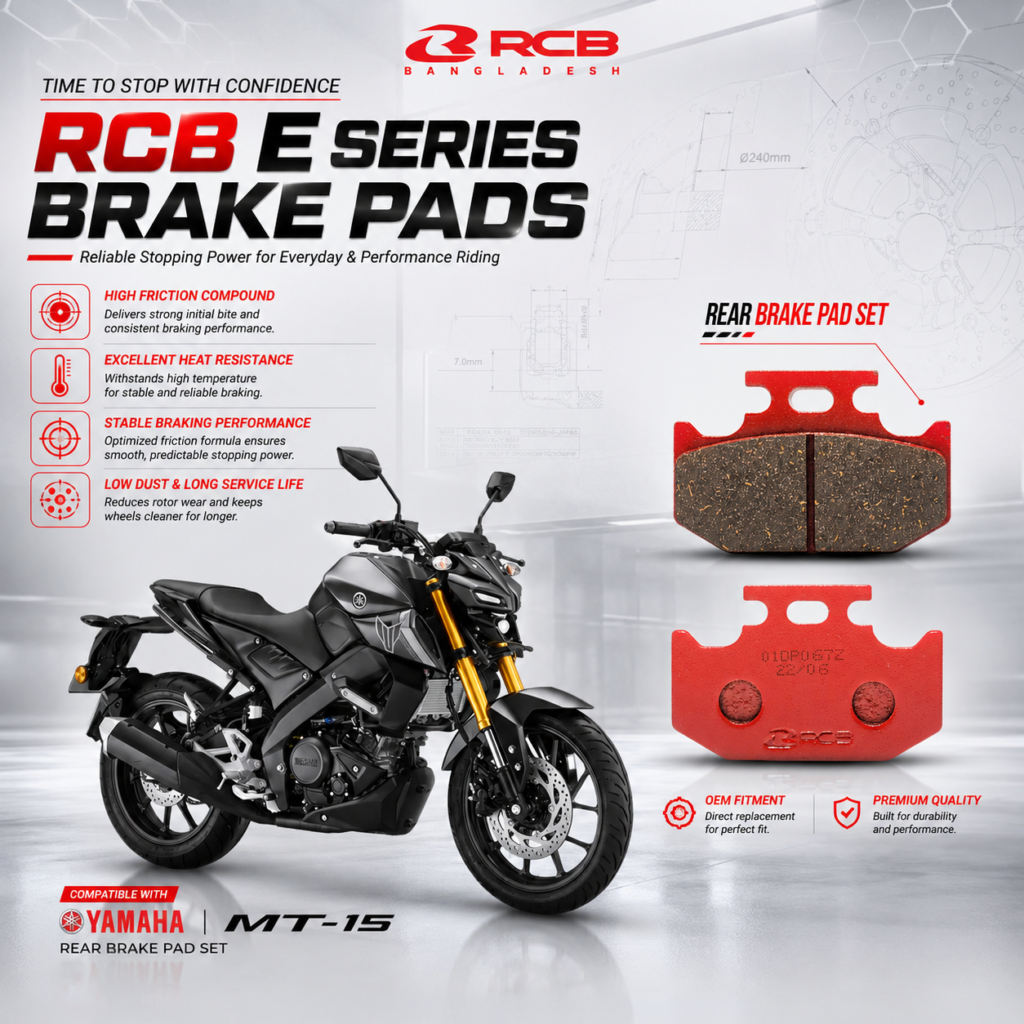
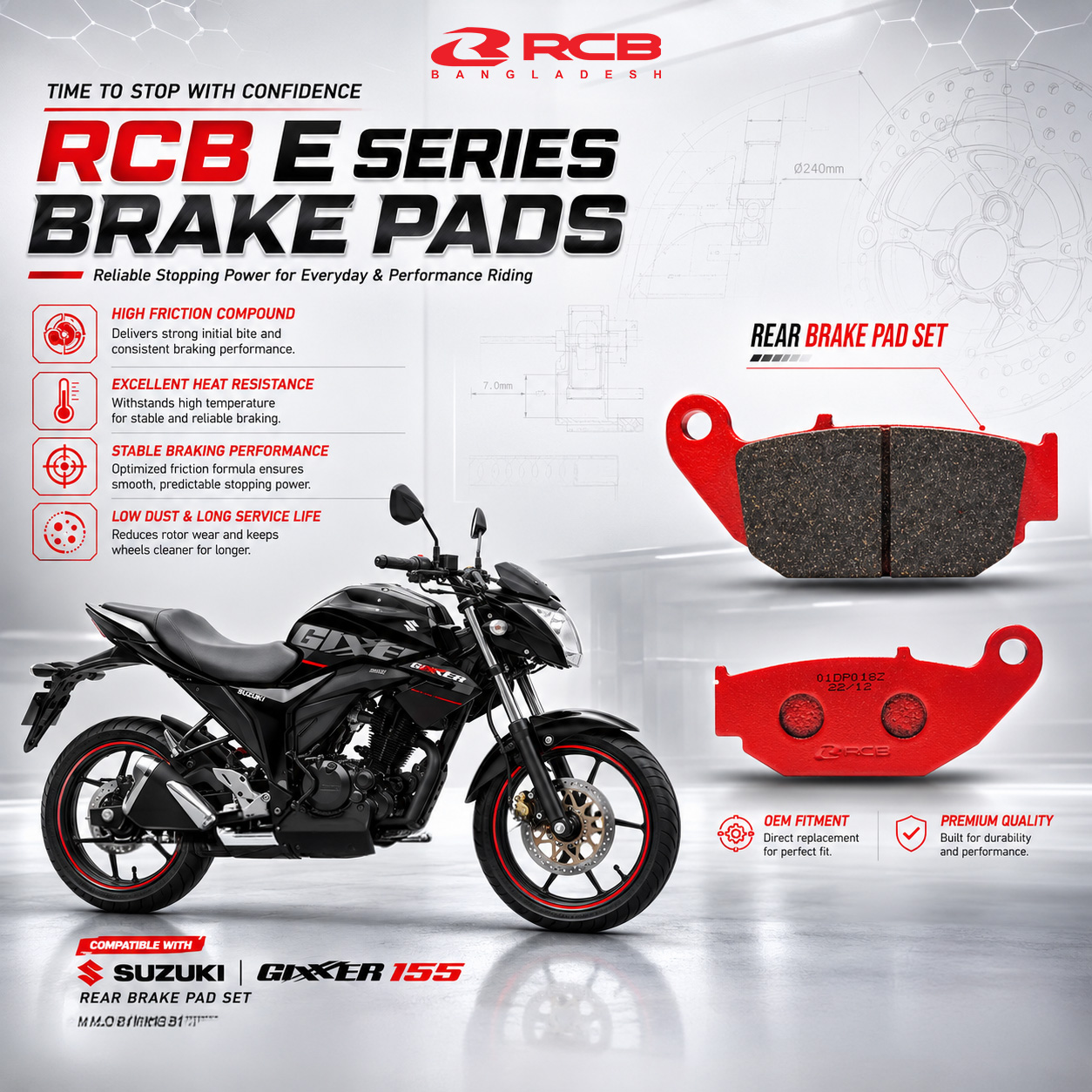
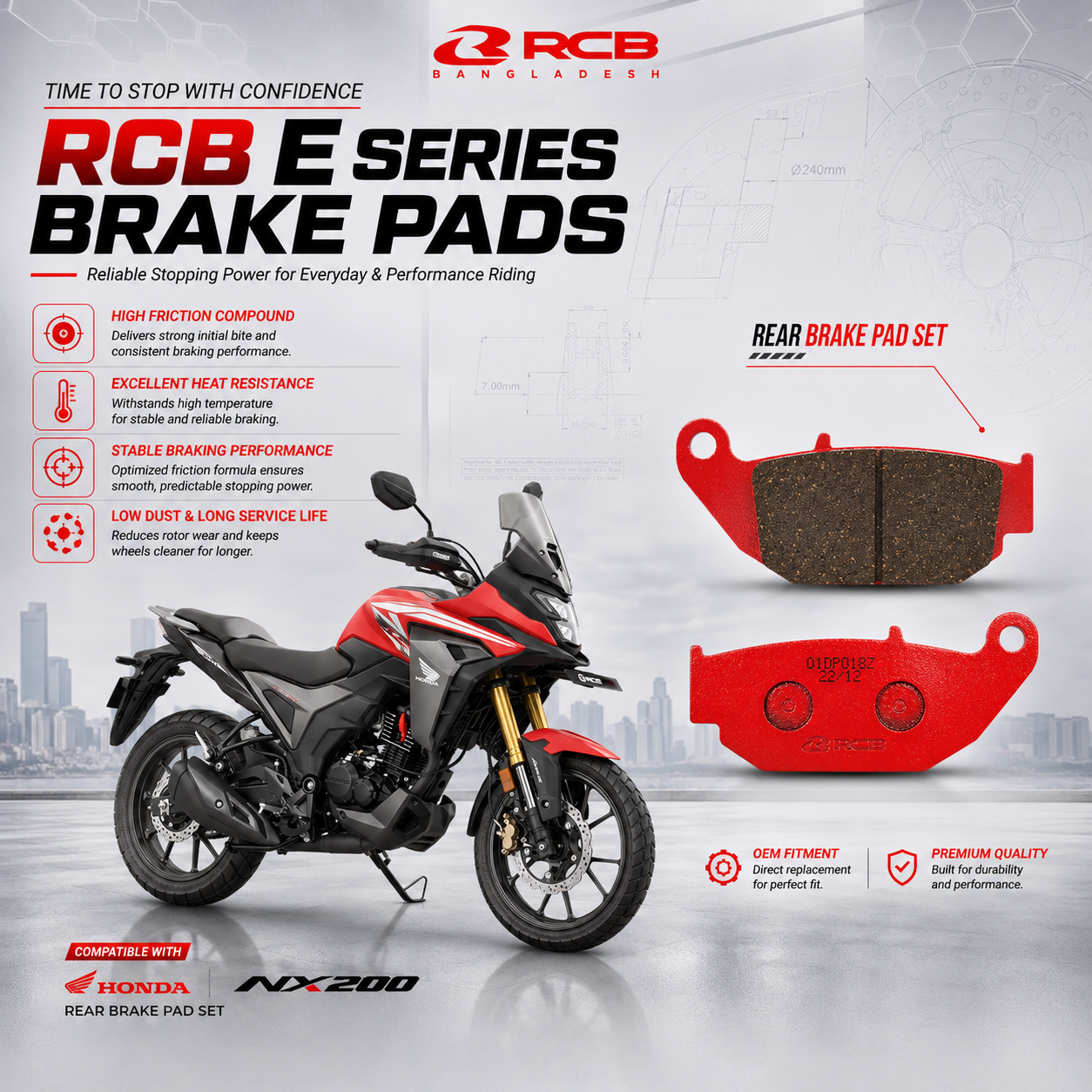
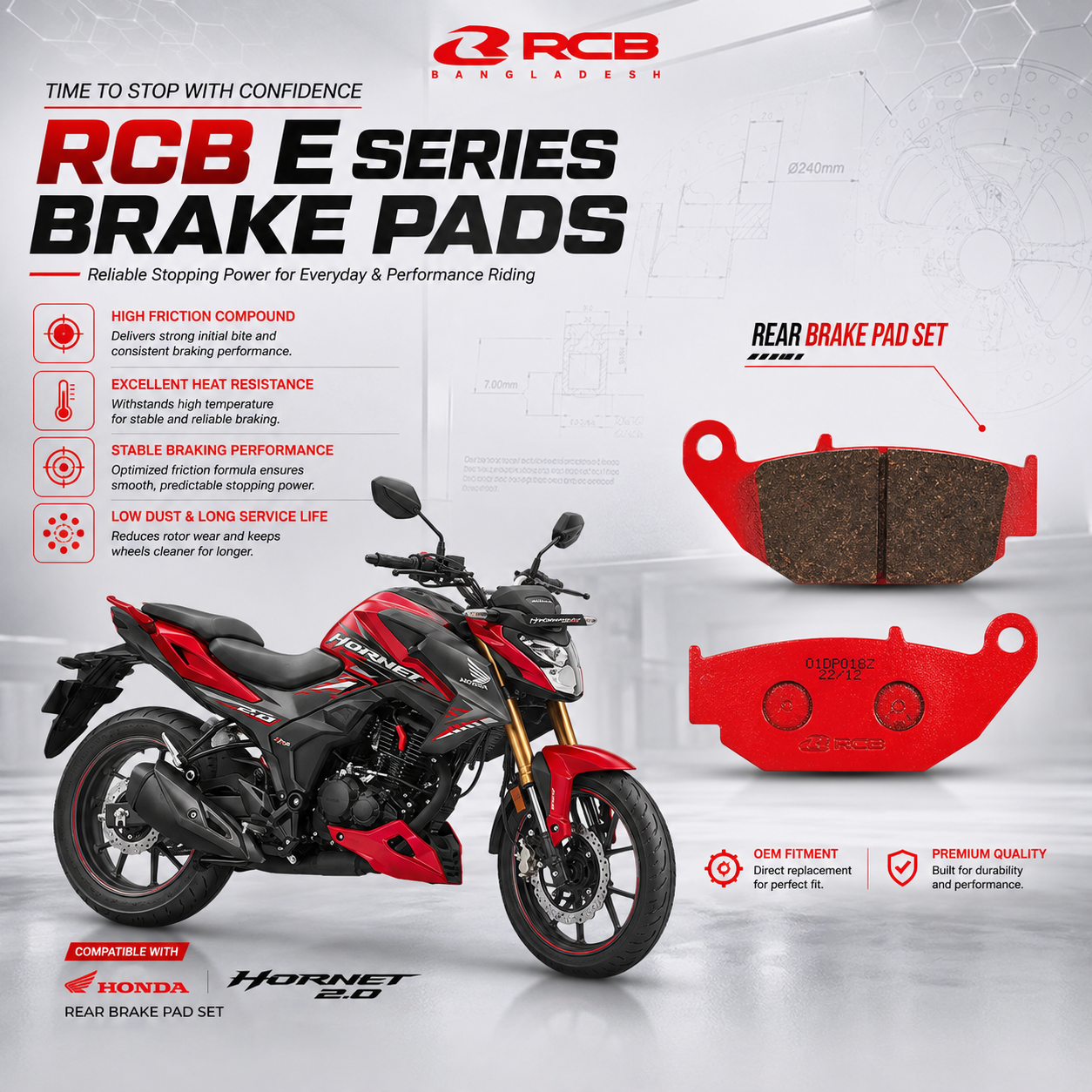
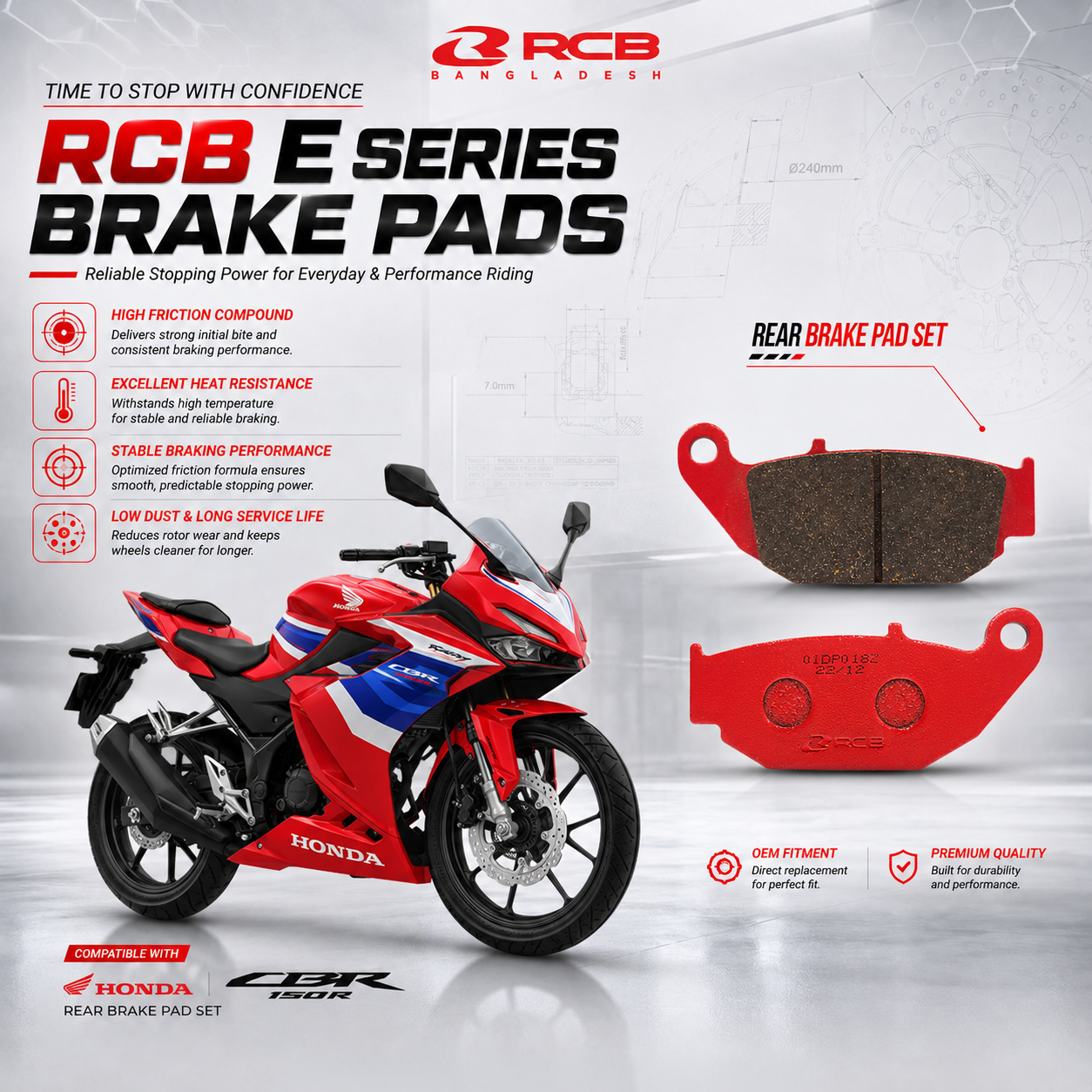
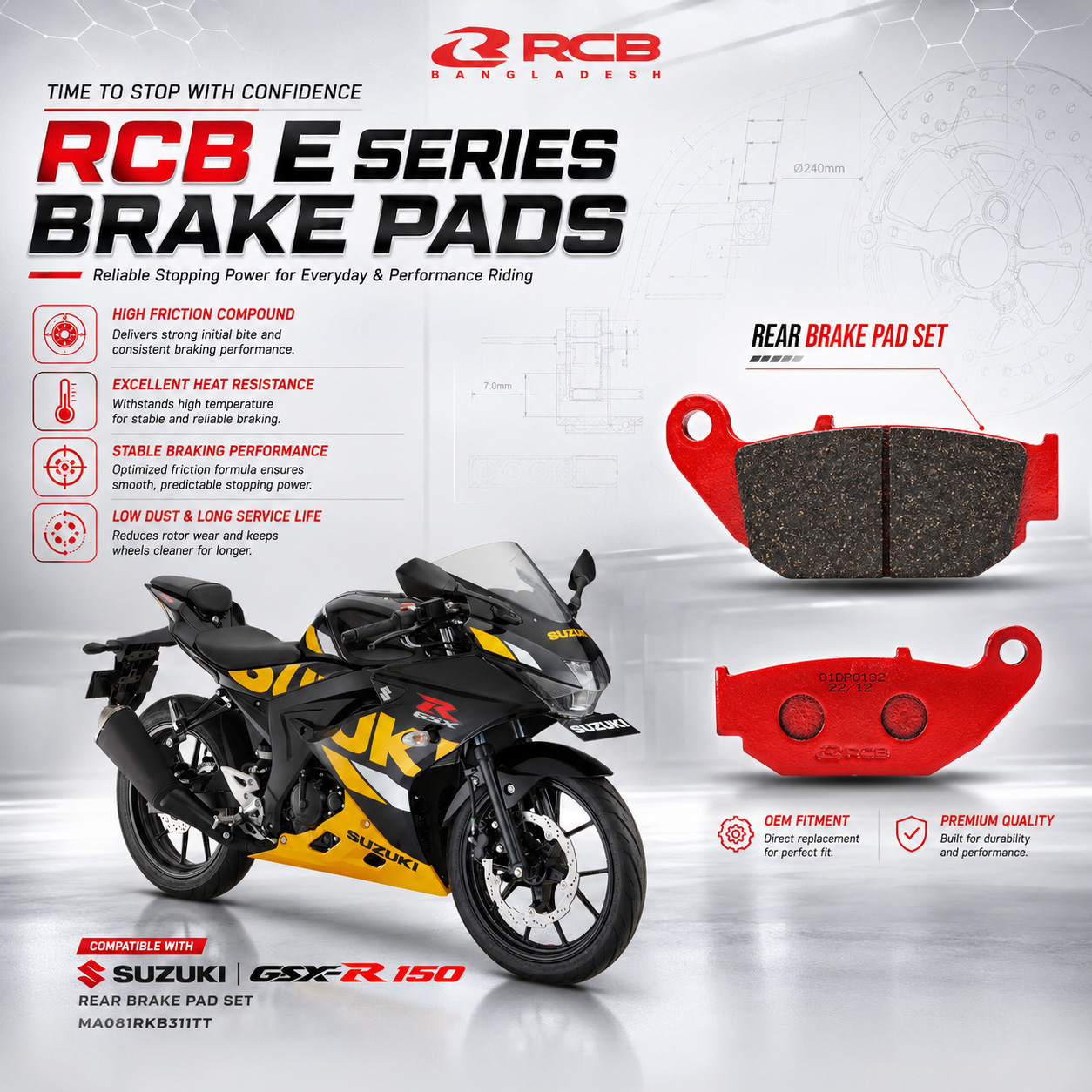
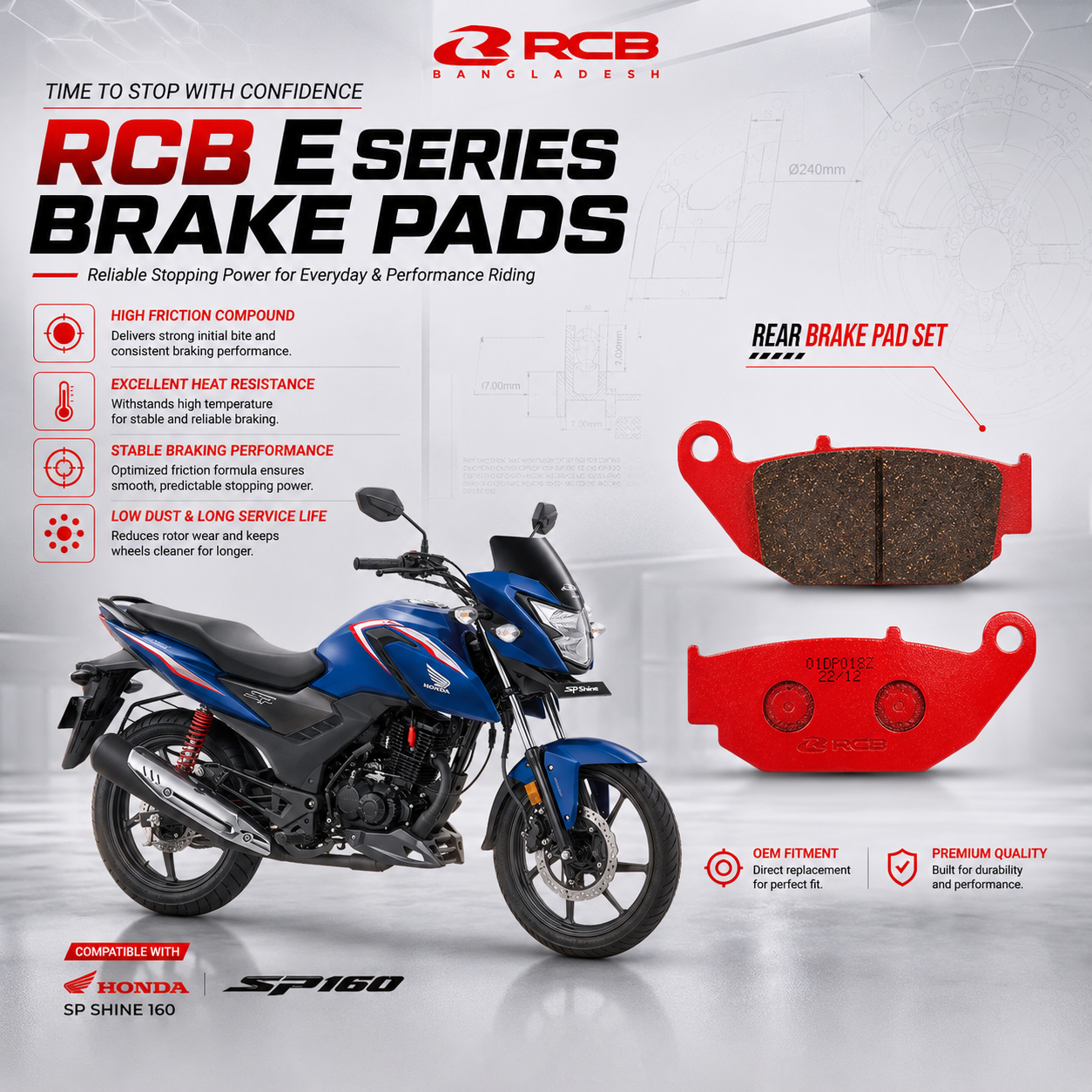
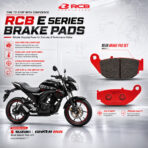
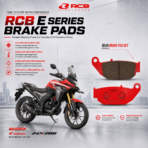
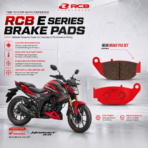
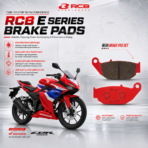
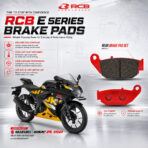
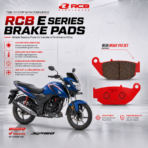
RCB E Series Rear Brake Pads are engineered as a premium high-performance replacement for urban commuters, sport naked bikes, and lightweight adventure touring motorcycles. Positioned as an elite organic-ceramic compound upgrade, the E Series balances responsive stopping power with superior everyday durability.
This specific pad footprint features broad multi-brand compatibility across standard non-CBS (Non-Combined Braking System) rear calipers. It delivers an immediate initial bite, consistent thermal stability, and low rotor wear under aggressive daily riding conditions.
Key Features
Premium Organic-Ceramic Matrix: Formulated from a sophisticated blend of organic fibers, copper filaments, and ceramic binders. This compound delivers a highly stable coefficient of friction across varying temperature ranges without requiring a long warm-up cycle.
Disc-Friendly Formulation: The E Series compound is structurally engineered to minimize abrasive rotor wear. It creates a smooth, protective transfer layer on the brake disc, significantly extending the service life of your rear brake rotor compared to harsh sintered metallic pads.
Enhanced Thermal Fade Resistance: Built-in heat isolation layers prevent high friction temperatures from migrating through the steel backing plate into your caliper’s hydraulic piston, keeping your rear brake lever firm and responsive even down steep hill descents.
Low-Noise & Reduced Dust Output: The non-metallic composition virtually eliminates the annoying high-pitched brake squeal common with stock pads. It produces minimal dust, keeping your rear rim and swingarm cleaner for longer periods.
Precise Chamfered Edge Profiling: Features factory-chamfered edges along the friction material. This profile allows the pad to seat smoothly into worn or grooved brake discs instantly, reducing the bed-in (burnishing) time right out of the box.
Technical Specifications
| Feature | RCB E Series Rear Brake Pad Details |
| Series Line | E Series Daily Performance Range |
| Compound Type | Non-Asbestos Premium Organic-Ceramic Matrix |
| Control Position | Rear Brake Caliper Only |
| Braking System Class | Optimized for Non-CBS (Standard Single-Circuit Lines) |
| Thermal Operating Zone | up to 400°C (752°F) Optimal Heat Envelope |
| Key Characteristics | Zero Noise, Ultra-Low Dust, High Initial Rotor Bite |
Universal Vehicle Compatibility Guide
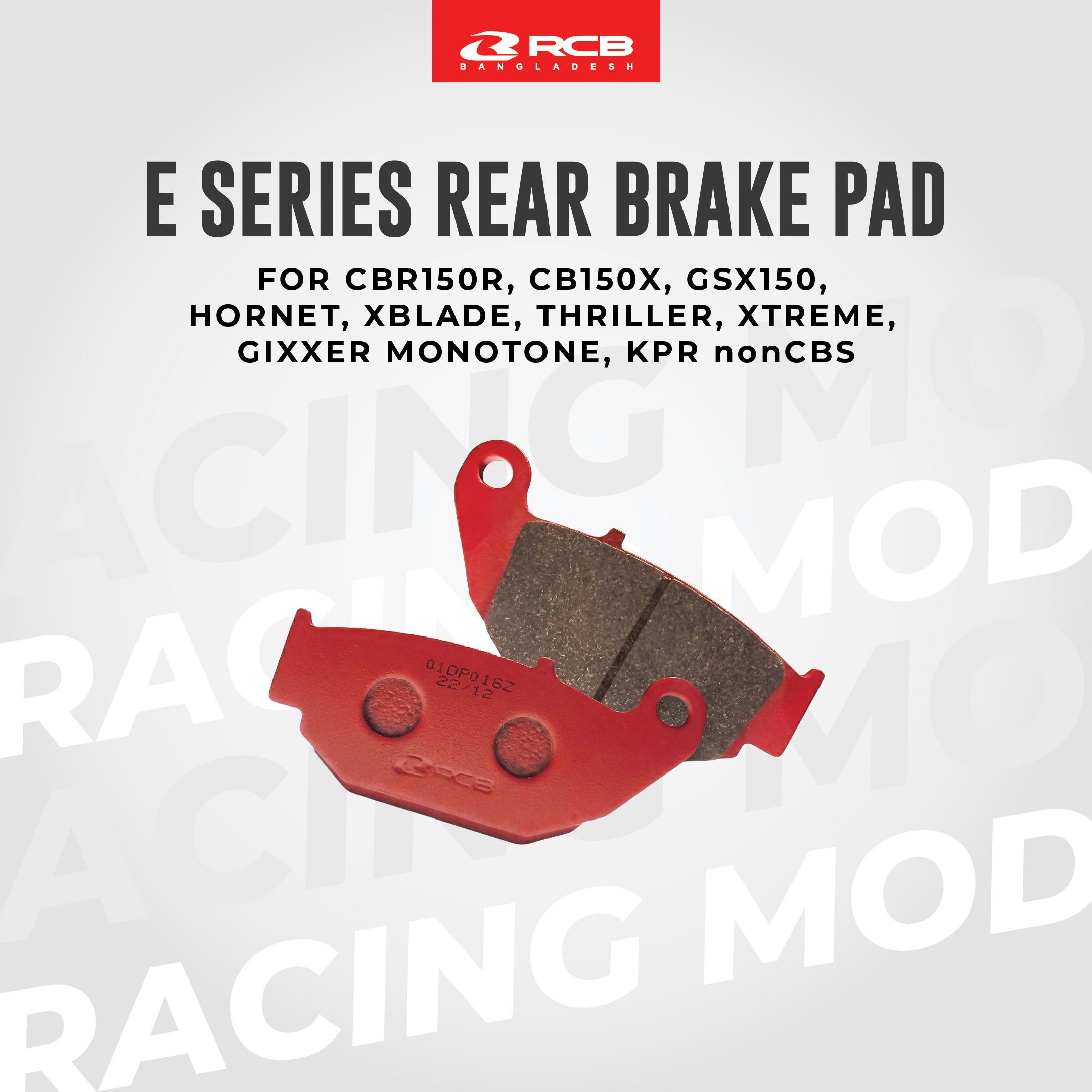
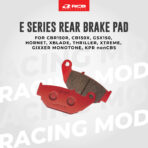
This specific RCB pad shape is precision-machined to snap directly into the rear calipers of the following popular 150cc–200cc motorcycle architectures (specifically non-CBS variants):
Honda: CBR150R (K45 series), CB150X (Adventure Tourer), CB Hornet 160R, XBlade 160.
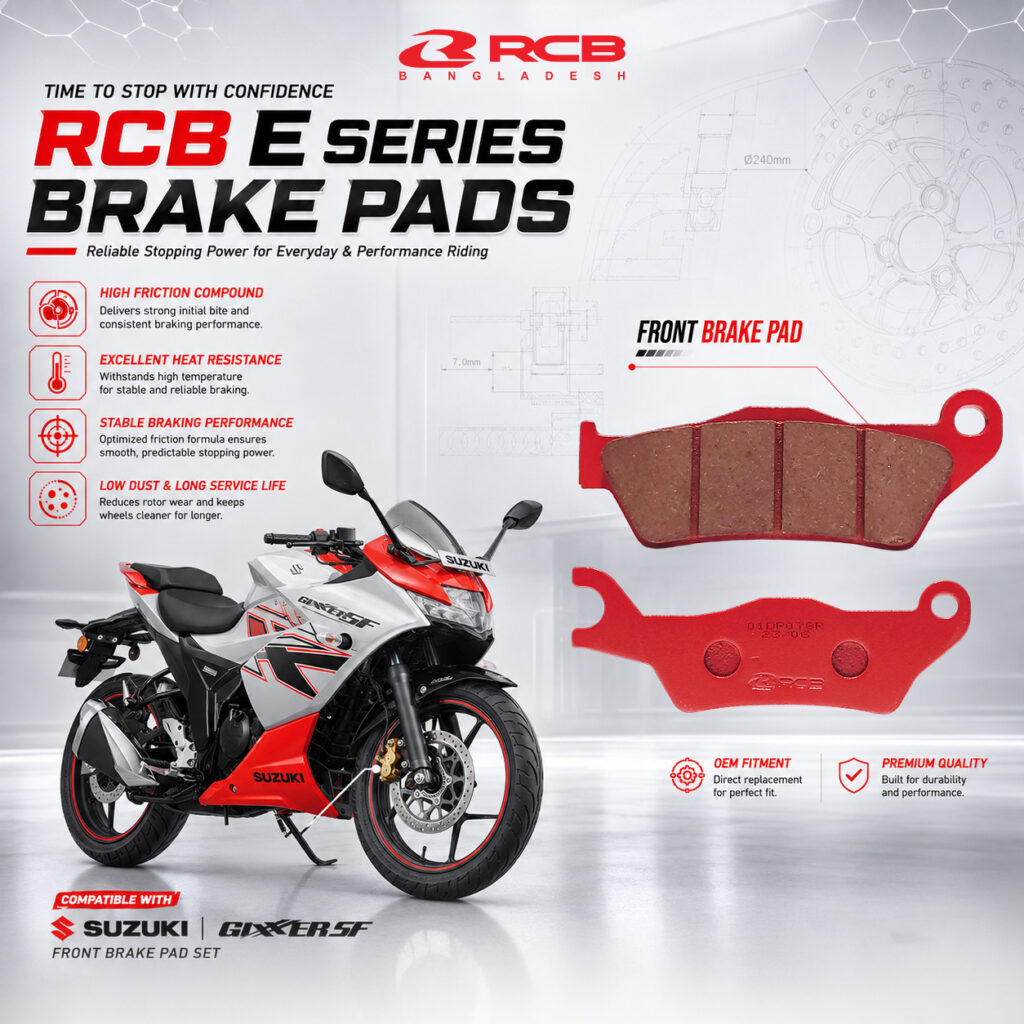
Suzuki: GSX-R150, GSX-S150, Gixxer 155 / SF 155 (Monotone / Single-Disc variants).
Hero: Thriller 160R, Xtreme 160R / 200S.
Lifan: KPR 150 / KPR 165R / KPR 200.
Step-by-Step Installation Guidelines
To prevent uneven pad wear, brake chatter, or glaze formation, follow this professional installation and alignment sequence:
1.Clean the Caliper Body: 10 min.
Remove the rear caliper mounting bolts and slide the caliper off the disc. Before pushing the pistons back, spray the assembly thoroughly with a dedicated brake cleaner spray and scrub away accumulated road grime and brake dust using a soft nylon brush.
2.Retract the Pistons: 5 min.
Using a specialized piston press tool or a flat-sided non-marring lever, slowly push the caliper pistons straight back into their bores. Ensure the master cylinder reservoir up on the handlebars or frame rails doesn’t overflow with returning brake fluid.
3.Lubricate Critical Slider Pins: 5 min.
Remove the pad retention slider pins. Clean off old crusty crusty lubricant, and apply a thin, microscopic film of high-temperature silicone brake grease onto the pin shafts. Warning: Do not let any grease touch the new organic pad faces or the rotor disc face.
4.Execute the Bed-In (Burnish) Process: 10 min.
Assemble the pads, torque the caliper mounts, and pump the brake pedal until it feels firm. Take the bike to a safe, empty road. Accelerate to 50 km/h and apply the rear brake smoothly down to 10 km/h. Repeat this cycle 10 to 15 times to mechanically transfer the pad material onto the rotor. Do not lock up or hold the brake to a complete stop during this cycle.
Technical Insight: Installing these pads onto a CBS (Combined Braking System) linked caliper may result in incorrect pad fitment or partial surface contact. Always verify that your rear master cylinder lines run completely independent of the front brake lever before finalizing assembly.